
Saving guide

How to save for a goal, one month at a time

A goal with a price and a date turns into a monthly number. Once you have that number, saving is a line in your budget rather than whatever happens to be left over.

Updated November 12, 2026 · General information, not financial advice.

1. Name it and price it

Write the goal down with a target amount: a trip, an emergency fund, a laptop, a deposit. Estimate generously; it is easier to finish early than to top up at the last minute.

2. Choose a date

The date decides the monthly amount. A goal with no date tends to drift.

3. Work out the monthly amount

Monthly amount = (target − already saved) ÷ months left.

Japan trip · illustrative plan

Target CA$8,000. Already saved CA$3,250. Still needed CA$4,750.

Leaving in 12 months: about CA$396 a month. At CA$400 a month you get there in 12 months. To leave in 10 months, save CA$475 a month.

Assumes regular contributions and no interest.

In Fin, give each goal a target, track what you have saved and find a pace that works.
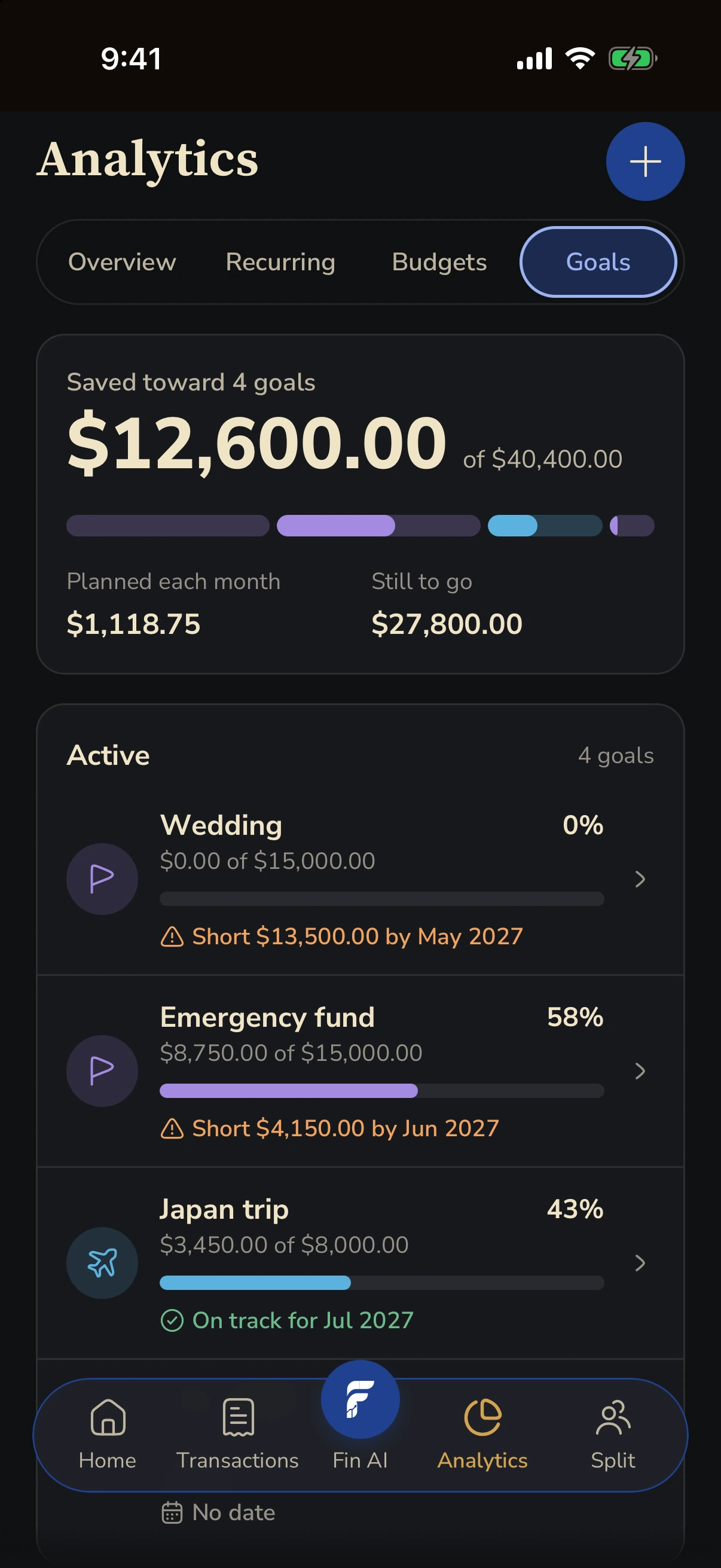
Fin Goals showing savings progress for a wedding, emergency fund, Japan trip and new laptop
Real Fin screenshot · synthetic demo data

4. Make saving the first line of the month

Treat the monthly amount like a bill. Many banks let you schedule a transfer to savings on payday, so the money moves before you can spend it. Then budget your categories from what remains.

5. Juggling more than one goal

List goals by date and importance. Fund the nearest essential one fully, then share what is left among the others. If the total is more than you can save, push a date back rather than quietly underfunding everything.

6. When you fall behind

A missed month is normal. Pick one of three moves: add a little to the next few months, move the date, or lower the target. Re-run the monthly amount and carry on. Checking progress once a month is enough.

More guides

Try it with your own month.

Start with manual accounts. Bank connection is optional.